![HER[AI]TAGE](https://her-ai-tage.pou-cakovec.hr/wp-content/uploads/2025/03/logo-1.png)
![HER[AI]TAGE](https://her-ai-tage.pou-cakovec.hr/wp-content/uploads/2025/03/logo-2.png)
In the time when wheat and barley were mown, there was no twine for binding sheaves. Then we went with carts to mow sedge, or cattail, which we would weave at home. Women and men wove ropes, and we called it “throwing ropes”. Mostly the reaper mowed, and the woman followed him and collected the swath into handfuls. As a child, I remember my dad waking me up as early as four in the morning, as soon as dawn broke, to mow the wheat in the cool air. I used to throw that rope woven from a sedge. The women collected the grain and tied the sheaves which were then stacked into a cross. The heaviest and largest sheaf placed on top was called popa (priest), as something very large. We had a couple of parish priests in the village, and then, it wasn’t really nice to say, but people used to say “this one will be for the priest”, as the biggest one.
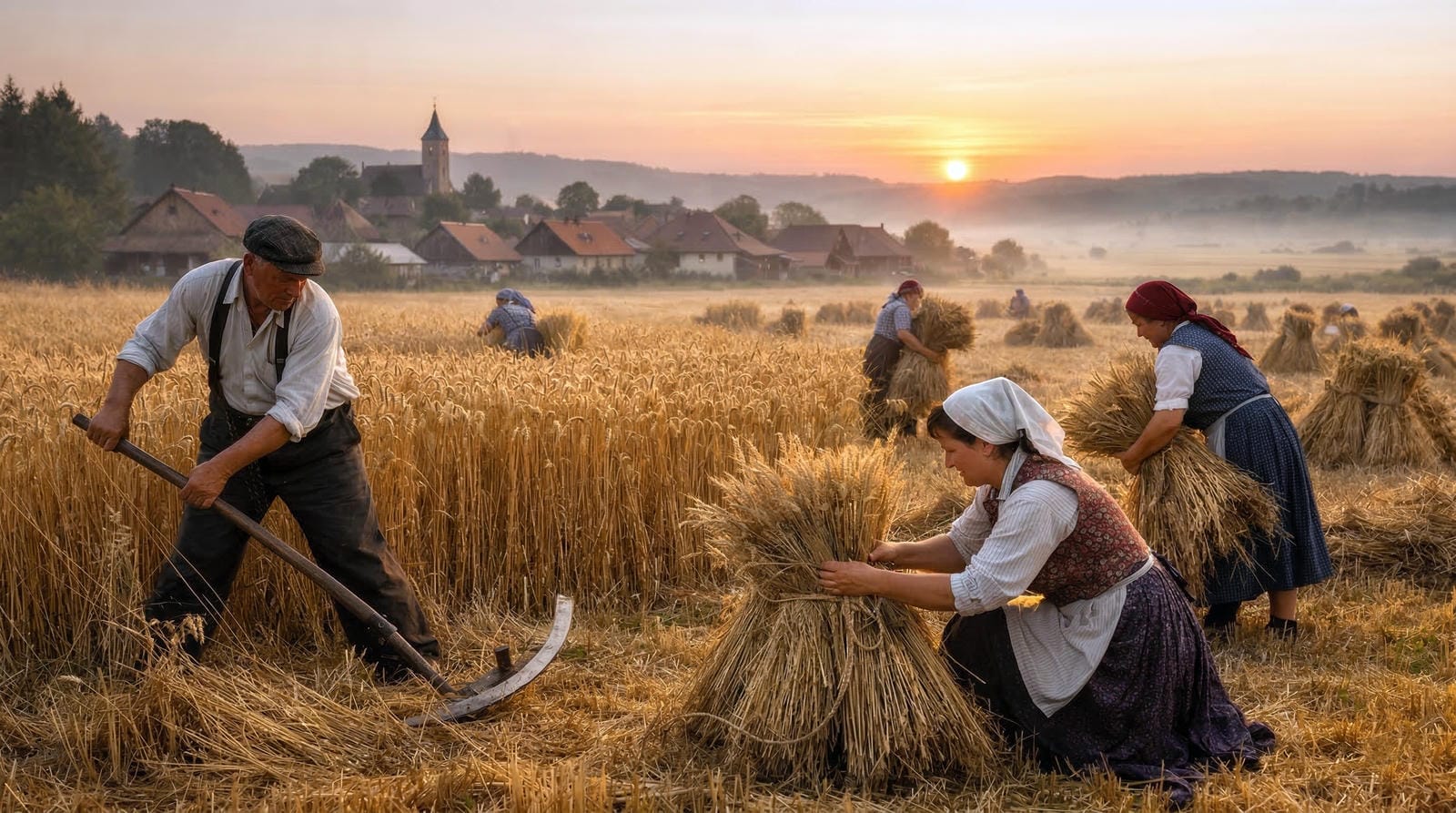
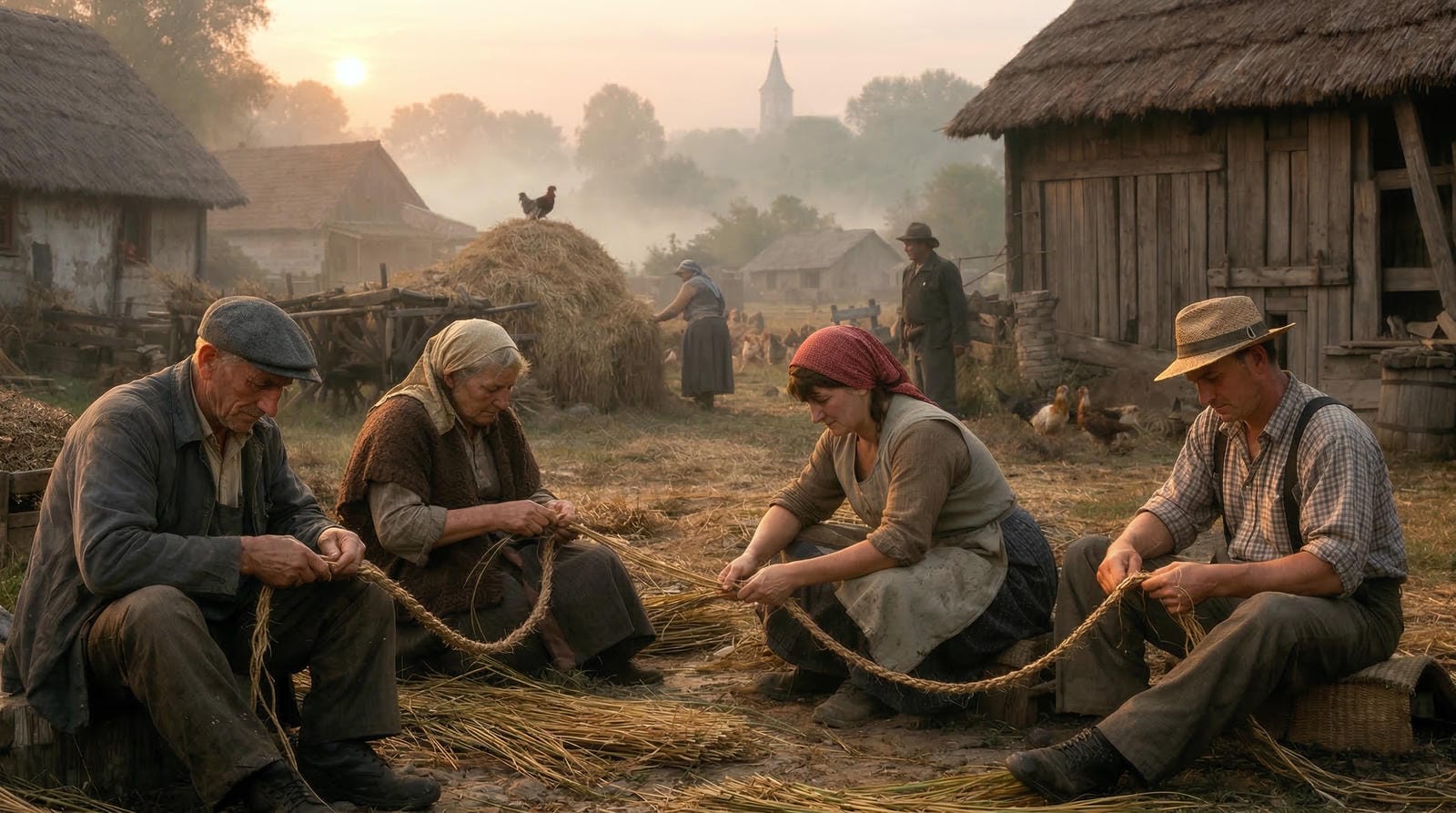
#TraditionalCraftsmanship #SustainableAgriculture #IntangibleCulturalHeritage #CircularEconomy #WetlandPreservation
Describing the manual harvest of wheat and the specific craft of weaving ropes from sedge or cattail, this story links wetland preservation with sustainable agriculture. It highlights the social order within the harvest process and the use of natural, biodegradable materials, which shows the circular economy and traditional ecological knowledge in action. The narrative preserves the memory of traditional craftsmanship that was necessary for the community’s livelihood.
The use of wetland plants is being revived in the EU as a climate-friendly land use. The preservation of such weaving skills is supported by the Creative Europe programme. The narrative highlights the interconnection between wetland habitats and agricultural utility, relevant to the EU Biodiversity Strategy.
Paludiculture pilot projects can modernise the use of cattails. Craft workshops can teach sedge weaving. Living history demonstrations can be educational events. Plastic-free agriculture initiatives can look to these biodegradable solutions. Harvest festivals can celebrate these traditions.
Sources:
https://www.moorwissen.de/paludikultur.html
https://pro.europeana.eu/project/weave-widen-european-access-to-cultural-communities-via-europeana
https://environment.ec.europa.eu/strategy/biodiversity-strategy-2030_en
The story you have just read is an authentic record of an elder’s experiences who participated in the HER[AI]TAGE project. While the content is original, the text may have been lightly edited for optimal clarity, flow, and readability. The accompanying visuals and audio recording were created responsibly with AI technology to enrich the storytelling experience while preserving the foundational authenticity of the presented story.
AI tools used: Google Gemini via Google AI Studio.