![HER[AI]TAGE](https://her-ai-tage.pou-cakovec.hr/wp-content/uploads/2025/03/logo-1.png)
![HER[AI]TAGE](https://her-ai-tage.pou-cakovec.hr/wp-content/uploads/2025/03/logo-2.png)
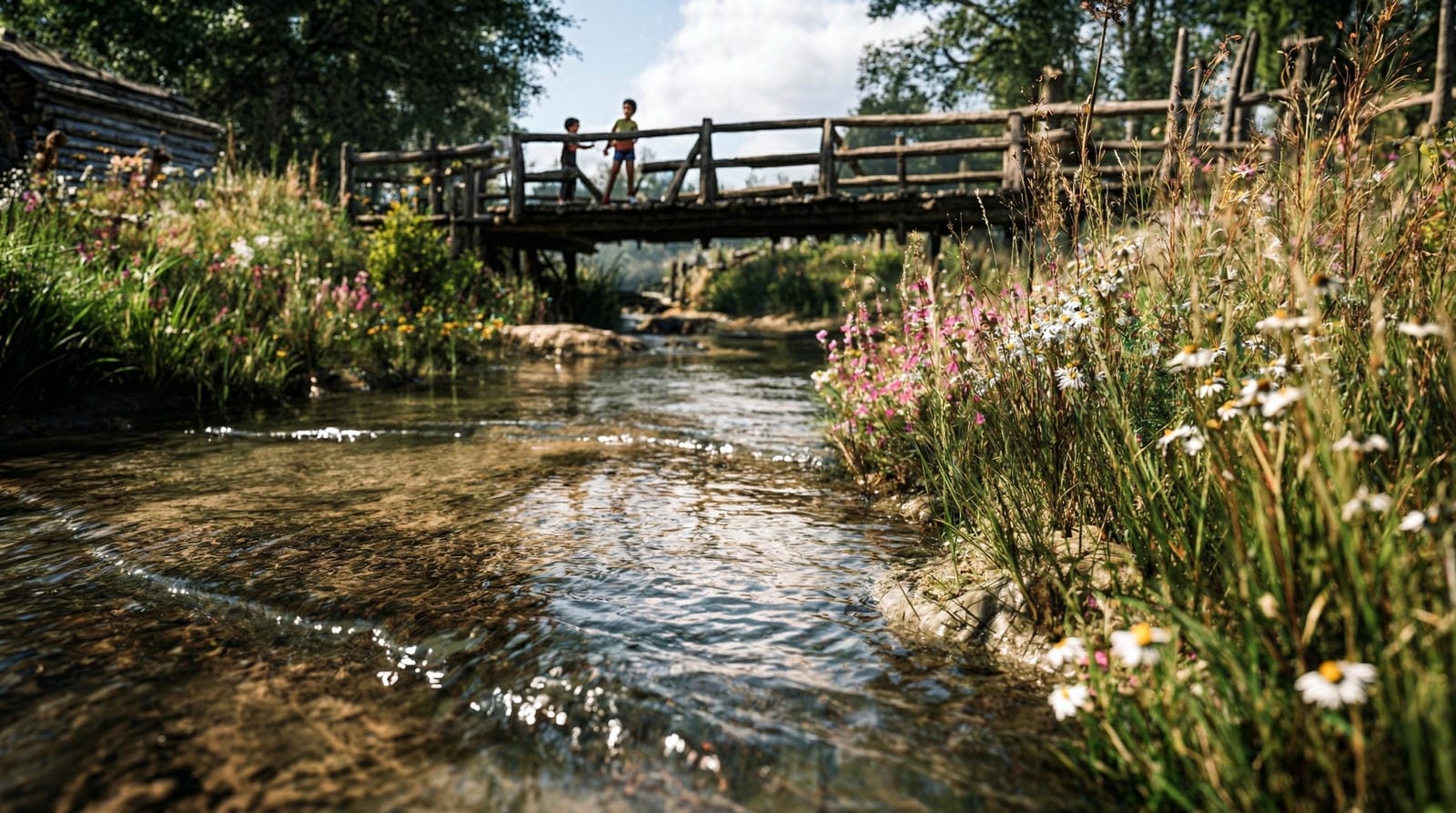
I grew up by the Trnava stream in Čakovec. I remember its changes. It knew how to rise and threaten to carry away the wooden bridge. When it was calm, it was our landscape of play and curiosity. The colour of the water fascinated me. Sometimes it was red from slaughterhouse waste, so it looked like a bloody river to us. They told us there were leeches in it, so we didn’t dare to swim, although braver children did. Meadows along the Trnava were full of scents. The grass was tall, and bees and butterflies were all around us. Today that is gone. Houses and asphalt have replaced the meadows, and I feel nostalgia for those scenes.

#FreshwaterEcosystemManagement #WaterQualityProtection #UrbanBiodiversity #CulturalLandscapes #PollutionControl
The narrator describes the Trnava stream as having two sides: a beloved place for play and a watercourse often polluted by industrial waste. This image clearly shows the impact of pollution on water quality and the community’s relationship with their local stream. The story mourns the loss of meadows and biodiversity to urban growth, reflecting the damage to urban biodiversity and cultural landscapes that often comes with development.
The pollution described is what the Urban Waste Water Treatment Directive and the Water Framework Directive aim to prevent. The historical reference to slaughterhouse waste highlights the progress made in EU environmental standards. The channelisation and urbanisation of the stream banks run counter to current EU policies on river restoration and green infrastructure. The story supports the need for the EU Soil Strategy’s targets on reducing soil sealing.
River restoration projects can renaturalise channelised streams, improving both ecology and aesthetics. Citizen observatories for water quality monitoring can empower residents to detect pollution events. Urban rewilding schemes can restore pollinator habitats along stream corridors. Industrial heritage trails could interpret the history of local industries while highlighting environmental improvements.
Sources:
https://environment.ec.europa.eu/topics/water/urban-wastewater_en
http://www.huhr-cbc.com/en/foundend-projects/343
https://environment.ec.europa.eu/topics/soil-health/soil-strategy-2030_en
The story you have just read is an authentic record of an elder’s experiences who participated in the HER[AI]TAGE project. While the content is original, the text may have been lightly edited for optimal clarity, flow, and readability. The accompanying visuals and audio recording were created responsibly with AI technology to enrich the storytelling experience while preserving the foundational authenticity of the presented story.
AI tools used: Google Gemini via Google AI Studio.