![HER[AI]TAGE](https://her-ai-tage.pou-cakovec.hr/wp-content/uploads/2025/03/logo-1.png)
![HER[AI]TAGE](https://her-ai-tage.pou-cakovec.hr/wp-content/uploads/2025/03/logo-2.png)
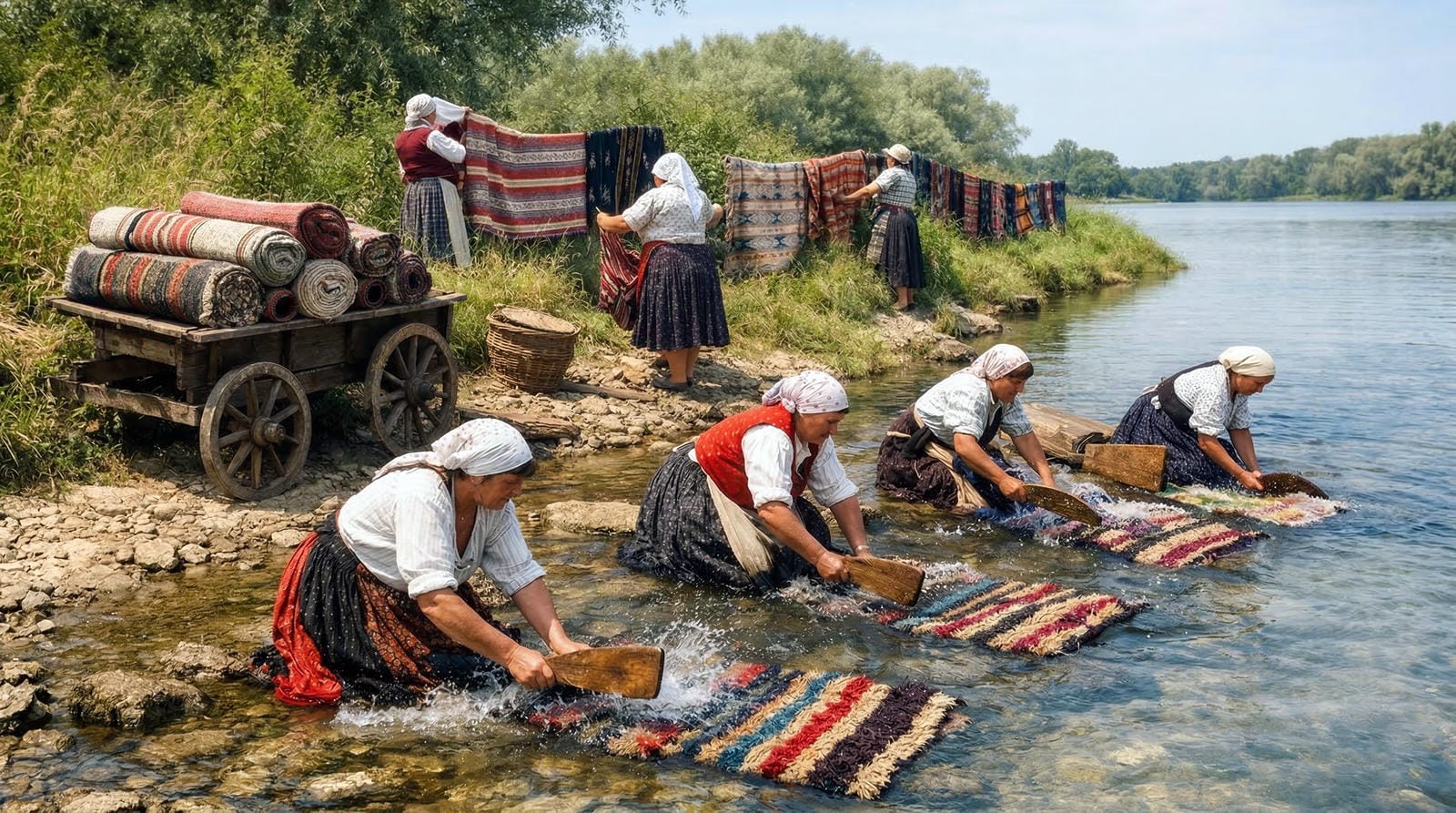
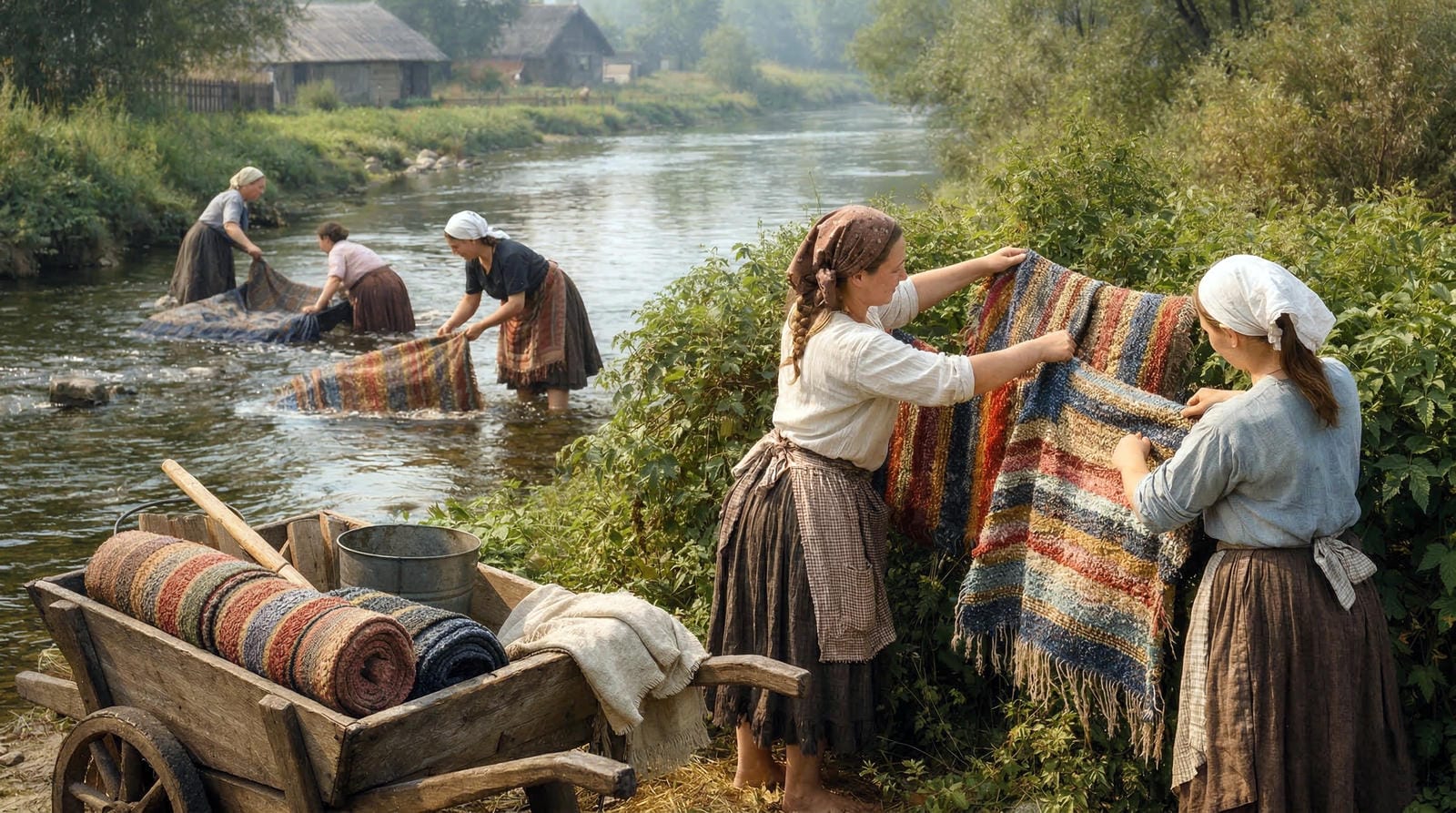
My grandmother was born in 1905. She told me how a hundred years ago they washed rag rugs on a backwater of the Danube called “at Đuka’s vineyard”. Women gathered there in summer to wash heavy laundry. Rag rugs were handmade rugs made from material leftover from old clothes. In our area, houses were rammed earth houses with earthen floors. The housewife arranged these floors by “tempering” them, that is, coating them with a mixture of soot and water, and then smoothing them with a coarse brush to make them smooth. Rag rugs were placed over them, which got dirty from walking. Rag rugs were long and colourful. Before winter and patron saint days, housewives wanted clean floors. Women would roll them into rolls and stack them on a wooden wheelbarrow with one wheel. On top, they would put a laundry bat, a large wooden spoon with which they beat the laundry. They also carried lye made from ash. Washing was mostly done by younger married women and girls at a place where the water was crystal clear. They beat the rag rugs with the laundry bat, and then helped each other spread the heavy wet fabrics on the surrounding bushes. They had to dry them there because they couldn’t carry them home wet.
#CircularEconomy #TraditionalCraftsmanship #IntangibleCulturalHeritage #WomensCooperatives #WaterQualityProtection
Detailing the craft of making “rag rugs” from recycled clothes, this story illustrates a traditional circular economy practice. It describes the communal washing of these rugs in the Danube, highlighting the role of women’s cooperatives and the necessity of clean water. The narrative celebrates traditional craftsmanship and intangible cultural heritage, linking the creation of these colourful textiles to the sustainable use of resources and community life.
The recycling of textiles is a priority in the EU Circular Economy Action Plan. This traditional practice is a precursor to modern textile recycling. The preservation of weaving skills is supported by Creative Europe. The communal aspect aligns with the Faro Convention.
Textile upcycling workshops can teach modern sustainability skills. Eco-museums can demonstrate traditional processes. Social enterprises can employ women to produce these rugs. Living heritage festivals can demonstrate the craft. Water quality awareness campaigns can use the history of washing spots.
Sources:
https://environment.ec.europa.eu/strategy/textiles-strategy_en
The story you have just read is an authentic record of an elder’s experiences who participated in the HER[AI]TAGE project. While the content is original, the text may have been lightly edited for optimal clarity, flow, and readability. The accompanying visuals and audio recording were created responsibly with AI technology to enrich the storytelling experience while preserving the foundational authenticity of the presented story.
AI tools used: Google Gemini via Google AI Studio.