![HER[AI]TAGE](https://her-ai-tage.pou-cakovec.hr/wp-content/uploads/2025/03/logo-1.png)
![HER[AI]TAGE](https://her-ai-tage.pou-cakovec.hr/wp-content/uploads/2025/03/logo-2.png)
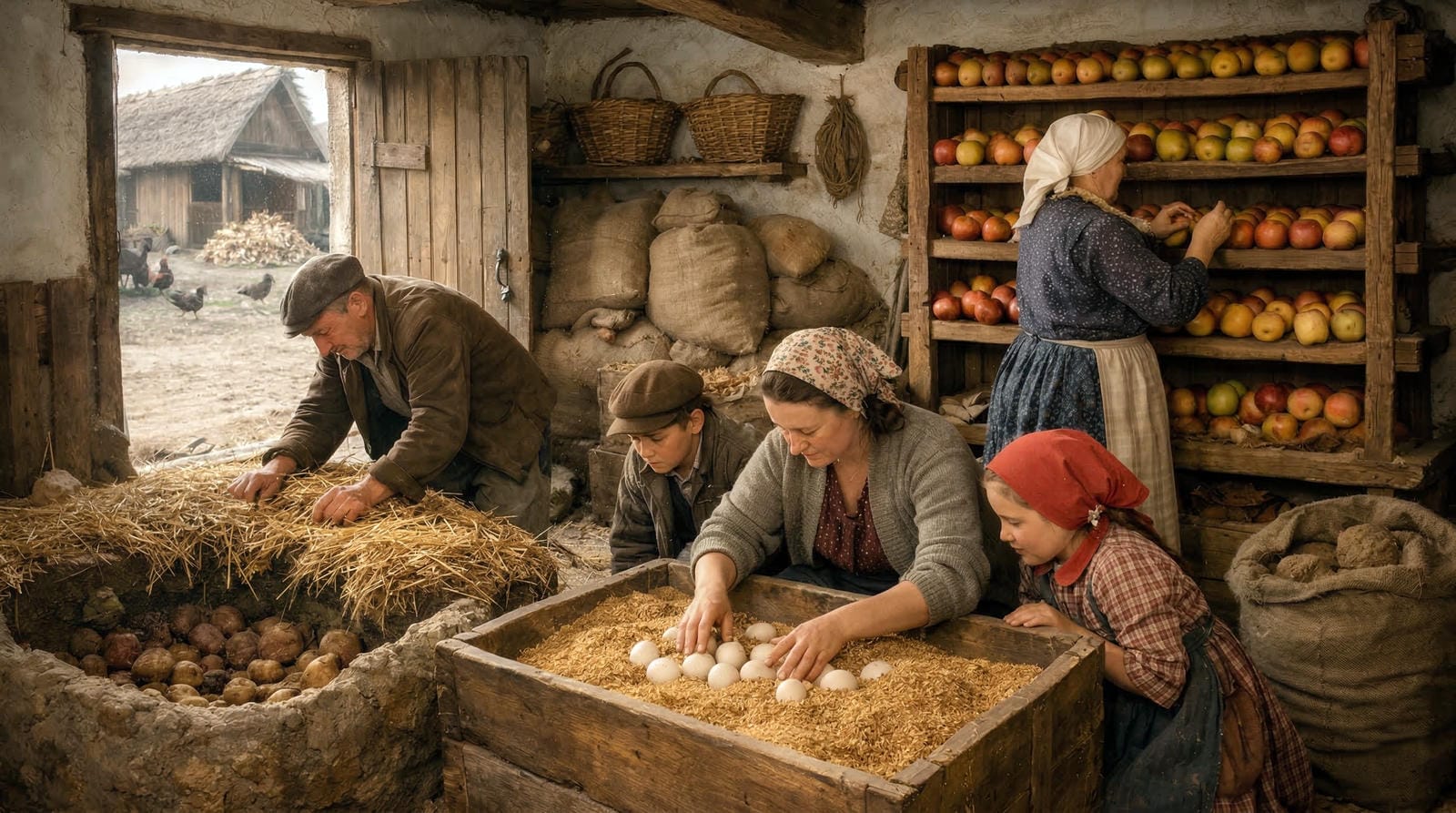
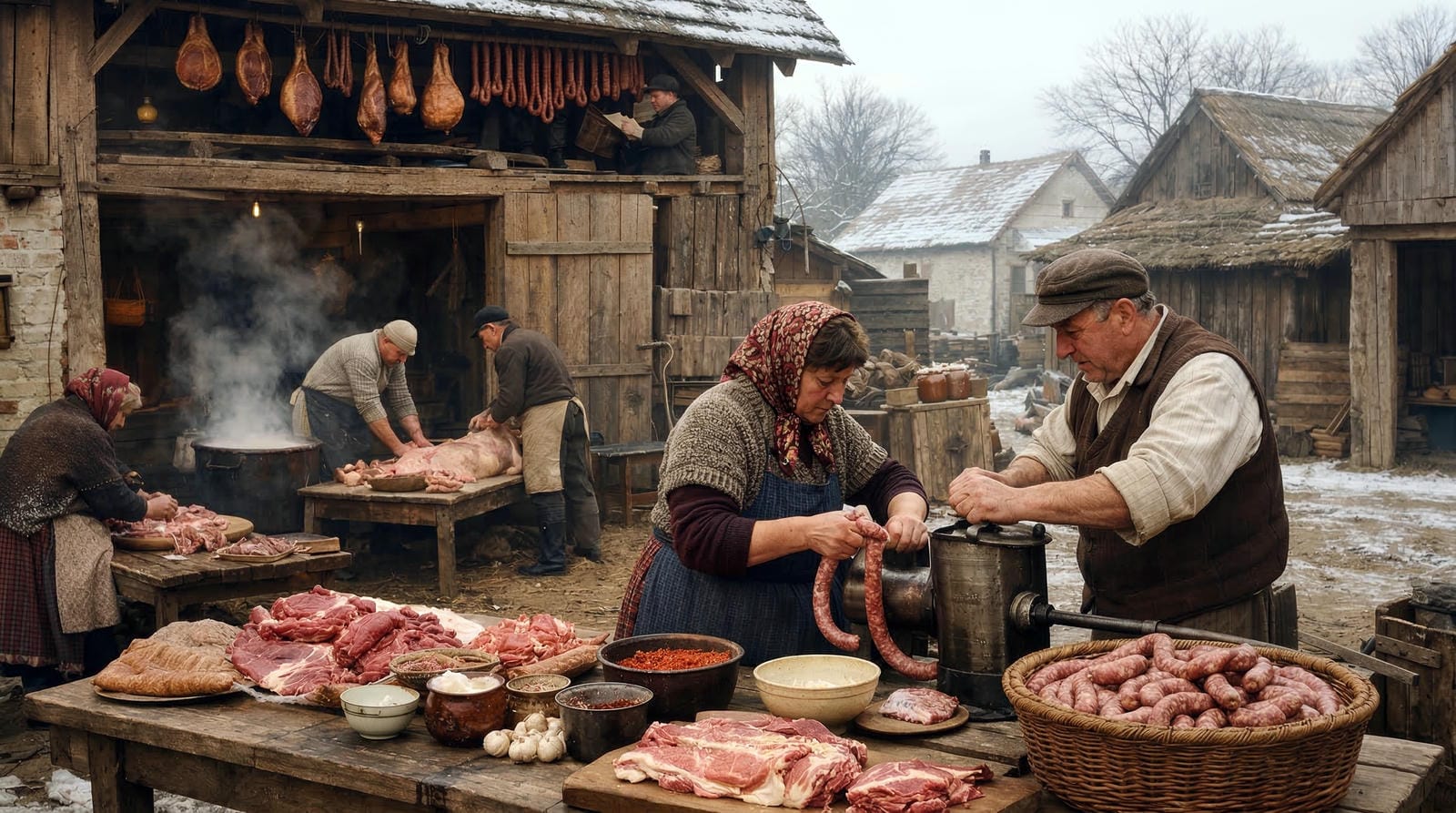
Once a year we had the pig slaughter. We knew how to use every part of the pig. Sausages were first smoked and then stored in minced lard (zaseka) to be preserved. Father always hung hams in the attic, where they dried. We stored eggs in grain bins with wheat by burying them in the grain. Father made special shelves for apples, and sometimes he stored them right in the straw. We buried turnips and potatoes in clamps. We covered them with straw and soil so the produce wouldn’t freeze. We made cottage cheese from milk and dried small cheeses, which we children loved to eat. Everything was homemade.
#CircularEconomy #SustainableAgriculture #TraditionalEcologicalKnowledge #FoodSecurityAndSovereignty #IntangibleCulturalHeritage
Detailing the preparations for winter, this story describes a household economy where nothing was wasted, showing the principles of a circular economy. It recounts specific preservation techniques like smoking meat, storing eggs in grain, and burying vegetables in clamps. These practices, rooted in traditional ecological knowledge, ensured food security and represent a form of intangible cultural heritage centred on self-sufficiency and using resources wisely.
These practices are the epitome of short food supply chains and food waste reduction, key targets of the Farm to Fork Strategy. Traditional preservation methods are often registered under EU quality schemes. The bio-economy strategy supports the use of by-products. Hygiene regulations sometimes challenge the commercialisation of these methods.
Food heritage workshops can teach preservation techniques to reduce waste. Registering products under EU quality schemes protects the name and method. Root cellar construction workshops can promote low-energy food storage. Farm-to-table tourism experiences can centre on traditional practices. School gardens can teach about seasonality and storage.
Sources:
https://agriculture.ec.europa.eu/farming/geographical-indications-and-quality-schemes_en
https://food.ec.europa.eu/horizontal-topics/farm-fork-strategy_en
https://environment.ec.europa.eu/strategy/bioeconomy-strategy_en
The story you have just read is an authentic record of an elder’s experiences who participated in the HER[AI]TAGE project. While the content is original, the text may have been lightly edited for optimal clarity, flow, and readability. The accompanying visuals and audio recording were created responsibly with AI technology to enrich the storytelling experience while preserving the foundational authenticity of the presented story.
AI tools used: Google Gemini via Google AI Studio.