![HER[AI]TAGE](https://her-ai-tage.pou-cakovec.hr/wp-content/uploads/2025/03/logo-1.png)
![HER[AI]TAGE](https://her-ai-tage.pou-cakovec.hr/wp-content/uploads/2025/03/logo-2.png)
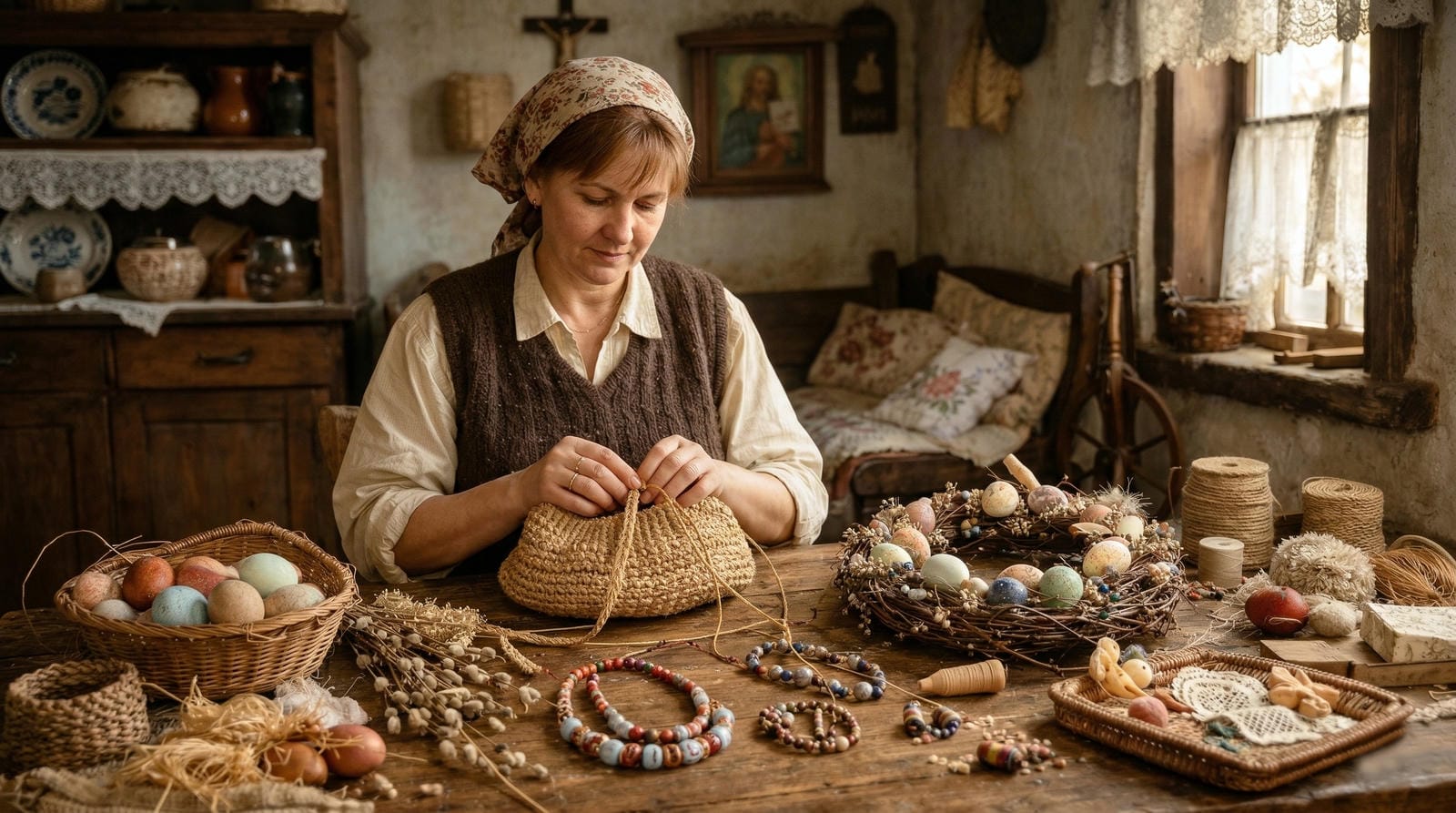
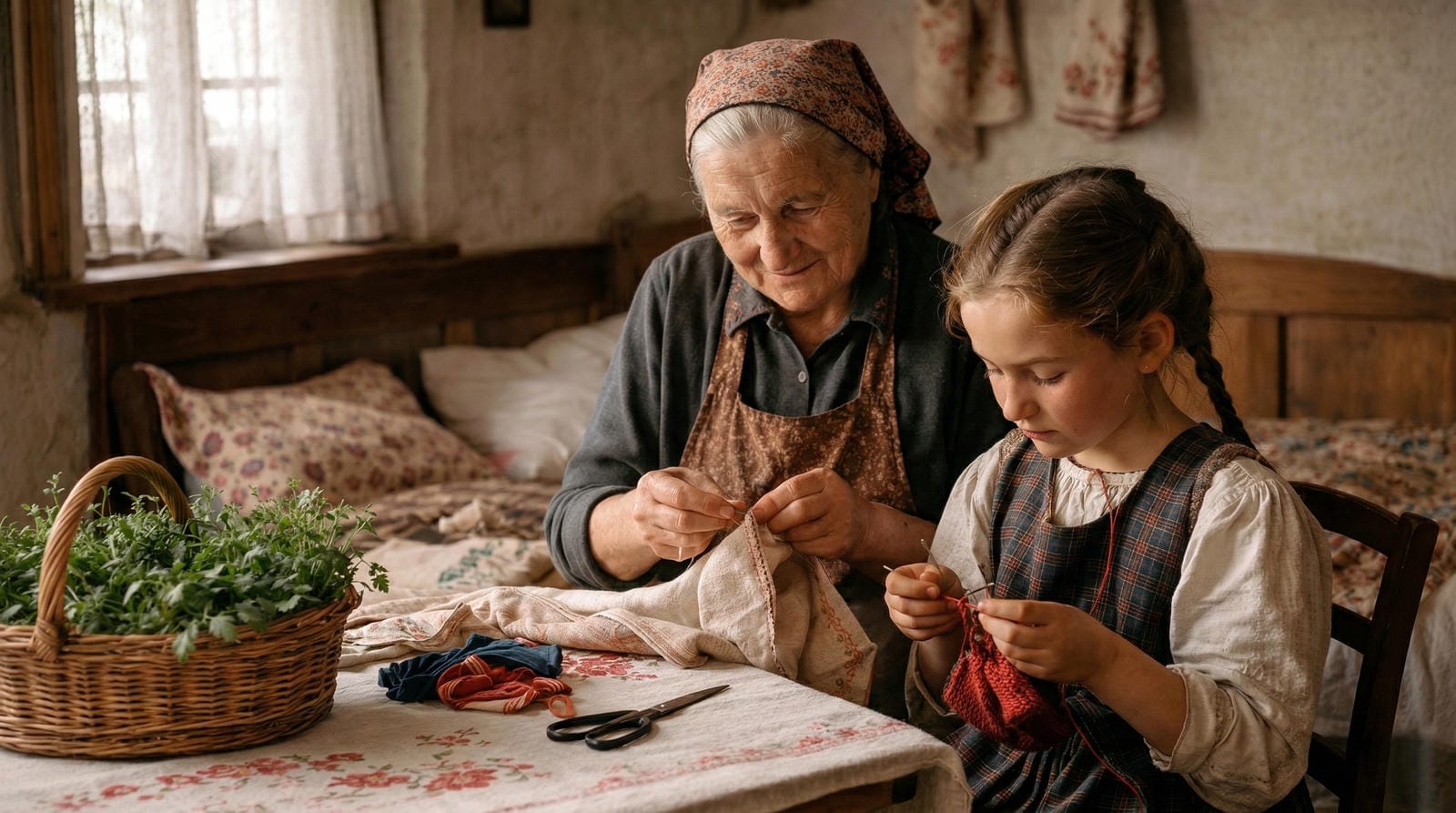
I received knowledge from my grandmother through stories and work. I learnt how to sew, knit, gather herbs, and work in the field. Today, young people rarely ask about that. My younger grandson was interested and asked about our Hungarian origins. He wanted to see his great-grandfather’s grave in Hungary. Others are not interested. When I do needlework, some still come and ask me to give them a bag, a necklace, or an Easter wreath. I am glad because I feel that at least something remains. My advice is for young people to preserve nature and tradition. They must not throw away but should use what nature gives. Everything we had once was created from what we picked and made ourselves. That is knowledge that should not disappear.
#TraditionalCraftsmanship #IntergenerationalLearning #IntangibleCulturalHeritage #CircularEconomy #SustainableTourism
The narrator describes the delicate process of passing down traditional craftsmanship skills like sewing and knitting from grandmother to grandchild. The story touches on the risk of losing this knowledge because young people are often not interested, but it also celebrates the moments when curiosity about family history or specific items sparks a connection. The advice to use what nature provides links these heritage skills directly to sustainability and the circular economy.
The EU promotes the transmission of traditional skills through the Pact for Skills and specific Erasmus+ initiatives focusing on intergenerational learning. The preservation of crafts is also a key component of the Creative Europe programme. The story’s emphasis on using natural materials aligns with the EU’s bioeconomy strategy. The cross-border element touches upon the EU’s cohesion policy and support for national minorities and cross-border cooperation.
Living Human Treasures programs can formally recognise and support individuals holding these skills. Intergenerational workshops in schools or community centres can facilitate the transmission of crafts. Social entrepreneurship models can turn these crafts into viable economic activities. Digital archives of oral histories and craft techniques can preserve the knowledge even if practice declines. Heritage tourism can offer visitors the chance to learn these skills, generating income for artisans.
Sources:
https://pact-for-skills.ec.europa.eu/index_en
https://pro.europeana.eu/project/crafted
https://epale.ec.europa.eu/en/blog/intergenerational-learning-environmental-awareness
The story you have just read is an authentic record of an elder’s experiences who participated in the HER[AI]TAGE project. While the content is original, the text may have been lightly edited for optimal clarity, flow, and readability. The accompanying visuals and audio recording were created responsibly with AI technology to enrich the storytelling experience while preserving the foundational authenticity of the presented story.
AI tools used: Google Gemini via Google AI Studio.