![HER[AI]TAGE](https://her-ai-tage.pou-cakovec.hr/wp-content/uploads/2025/03/logo-1.png)
![HER[AI]TAGE](https://her-ai-tage.pou-cakovec.hr/wp-content/uploads/2025/03/logo-2.png)
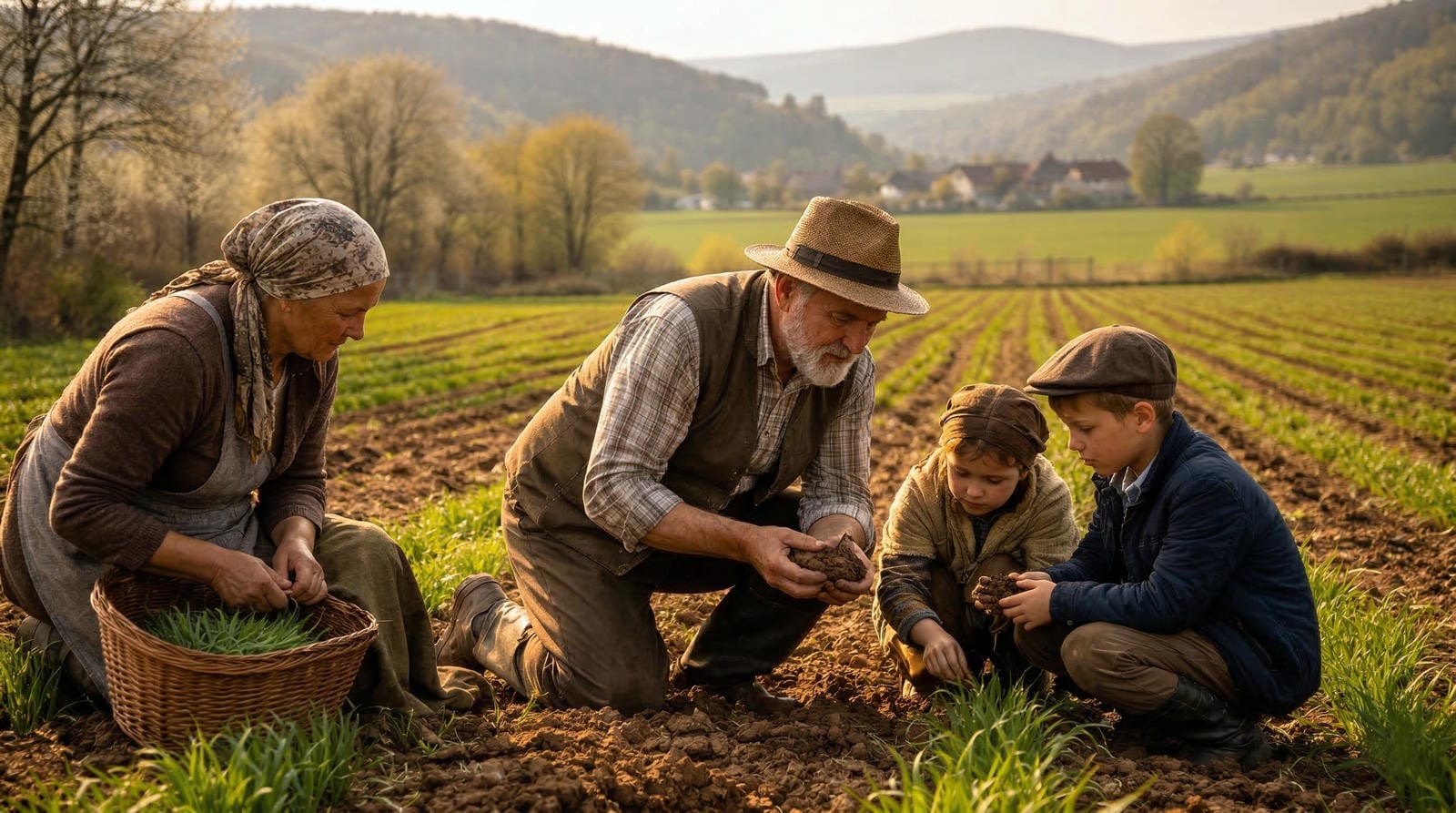
It was known exactly which day was suitable for a certain task. Dates were set in the calendar. Later I learnt about the Maria Thun sowing calendar, which matches our former way of life very well. All of that was already familiar to me. People knew when to pay respects to a sown field. After Sunday mass, the masters always went to inspect their crops. We also gathered plants in the meadows for both animals and humans. Early in the spring, we gathered lettuce and continued doing so until autumn. This knowledge was passed down from generation to generation and represented a genuine connection between man and nature.

#TraditionalEcologicalKnowledge #SustainableAgriculture #IntangibleCulturalHeritage #HumanNatureCoexistence #FoodSecurityAndSovereignty
Connecting traditional farming practices with specific sowing calendars, the narrator confirms local traditional ecological knowledge with wider concepts. Key motifs include the spiritual connection to the land and gathering wild foods as a reliable source of nutrition. This story reflects a holistic human-nature coexistence, where food security was ensured by understanding and respecting seasonal rhythms and natural cycles.
The validation of traditional practices aligns with the increasing recognition of agroecology and organic farming in the EU Farm to Fork Strategy. The broader principle of working with natural cycles is central to organic regulations. The gathering of wild plants relates to the sustainable use of biological resources. The story underscores the cultural dimension of sustainability, which is a key element of the GreenComp framework.
Biodynamic farming certification offers a market route for this approach. Community gardens can implement sowing calendars to educate urban dwellers on natural cycles. Phenology networks can track how climate change is altering seasonal dates. Harvest festivals can celebrate the spiritual and social aspects of agriculture. Educational programs can compare traditional calendars with scientific meteorological data to discuss climate change.
Sources:
https://eur-lex.europa.eu/legal-content/EN/TXT/?uri=CELEX:32018R0848
https://joint-research-centre.ec.europa.eu/greencomp-european-sustainability-competence-framework_en
The story you have just read is an authentic record of an elder’s experiences who participated in the HER[AI]TAGE project. While the content is original, the text may have been lightly edited for optimal clarity, flow, and readability. The accompanying visuals and audio recording were created responsibly with AI technology to enrich the storytelling experience while preserving the foundational authenticity of the presented story.
AI tools used: Google Gemini via Google AI Studio.