![HER[AI]TAGE](https://her-ai-tage.pou-cakovec.hr/wp-content/uploads/2025/03/logo-1.png)
![HER[AI]TAGE](https://her-ai-tage.pou-cakovec.hr/wp-content/uploads/2025/03/logo-2.png)
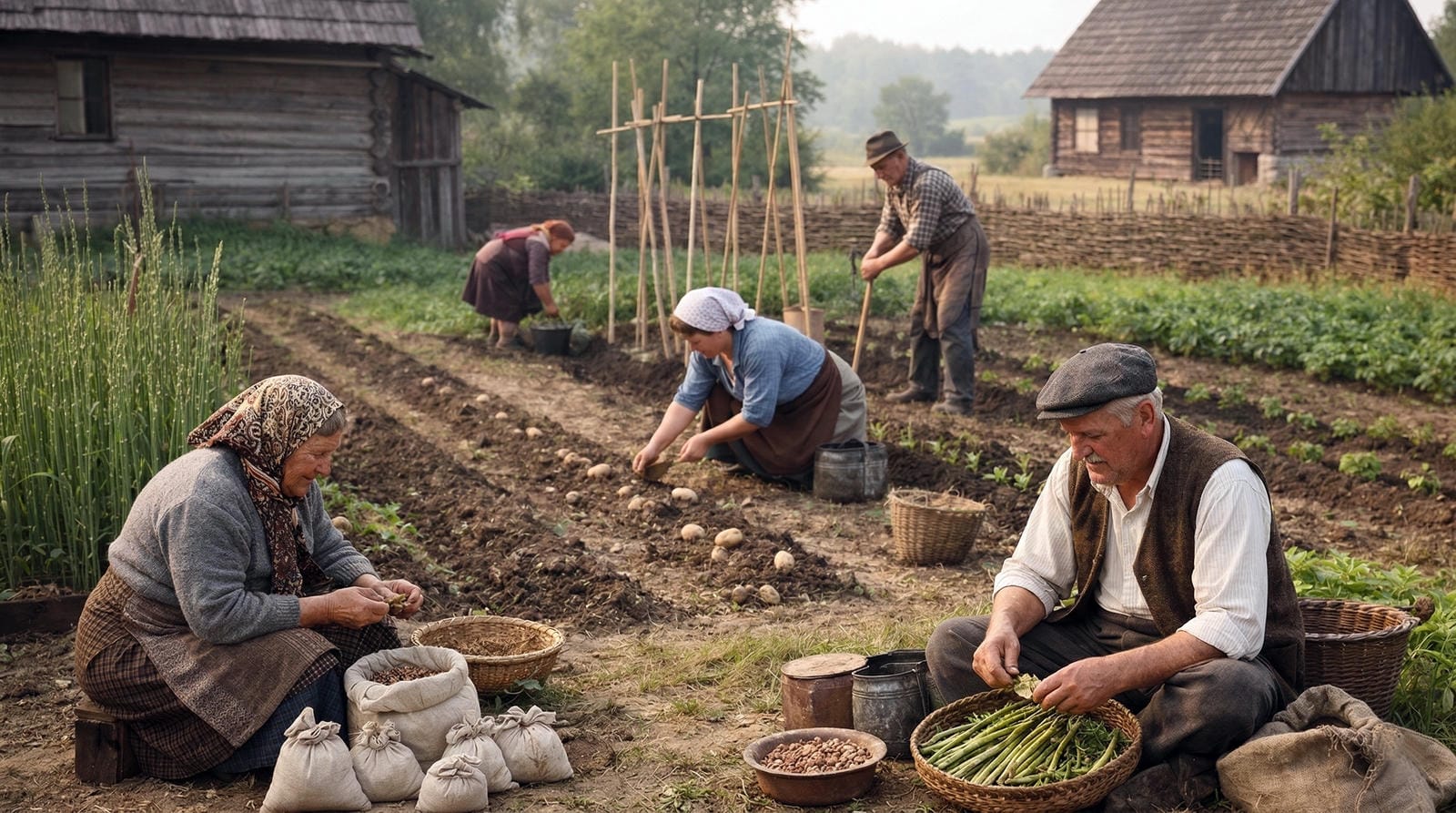
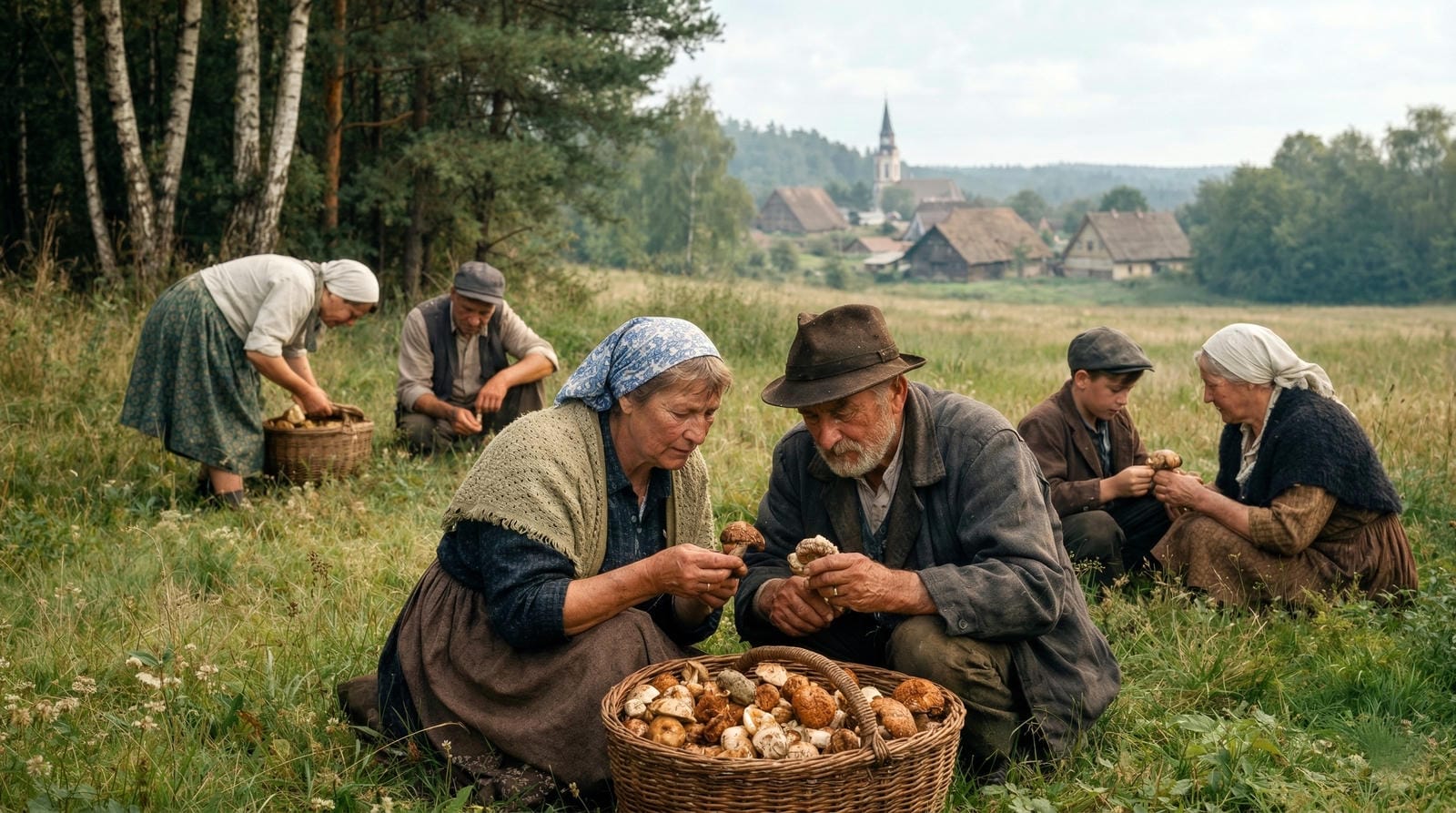
From an early age, I learnt that nothing is thrown away. We saved seeds, planted asparagus, chickling vetch, and potatoes. Porridge was the main dish. We cooked it from millet or corn in lard with cracklings. It was tasty and nutritious. We picked field mushrooms, but we were careful to pick only the clean and healthy ones. We knew how to distinguish good ones from poisonous ones. During droughts, we carried water from the well and watered the garden. We knew how to save every drop of water and every plant. I heard from my grandmother that brandy was also used for painful legs. The doctor advised that a child with asthma should go to the seaside because the air here is not good. We did everything according to the knowledge of the elders, and nature fed and healed us.
#CircularEconomy #SustainableAgriculture #TraditionalEcologicalKnowledge #FoodSecurityAndSovereignty #ResponsibleConsumption
This account shows the principles of a circular economy through the daily life of a traditional peasant, where nothing was wasted and everything had value. Key ideas include saving seeds, gathering wild foods, and eating local, seasonal produce. The narrative highlights the deep traditional ecological knowledge used to identify edible plants and save water during droughts, offering a model of resilience and efficiency that is very relevant today.
The practices described are direct precursors to the circular economy models promoted by the EU Circular Economy Action Plan. The saving of seeds relates to the conservation of agrobiodiversity, a key pillar of the Farm to Fork Strategy, which seeks to reverse the loss of genetic diversity in European agriculture. The concept of short food supply chains promoted by EU Rural Development policy is inherent in this lifestyle. Also, the knowledge of wild harvesting aligns with the bioeconomy strategy.
Community seed swaps and heritage gardens can preserve specific crop varieties. Foraging workshops led by local experts can teach safe and sustainable harvesting of wild foods. Culinary workshops focusing on zero-waste cooking based on traditional recipes can educate consumers on reducing food waste. Permaculture design courses often look to these traditional systems for models of water conservation and integrated pest management.
Sources:
https://environment.ec.europa.eu/strategy/circular-economy_en
https://food.ec.europa.eu/horizontal-topics/farm-fork-strategy_en
https://www.genresj.org/index.php/grj/article/view/genresj.OHNK3179
https://environment.ec.europa.eu/strategy/bioeconomy-strategy_en
The story you have just read is an authentic record of an elder’s experiences who participated in the HER[AI]TAGE project. While the content is original, the text may have been lightly edited for optimal clarity, flow, and readability. The accompanying visuals and audio recording were created responsibly with AI technology to enrich the storytelling experience while preserving the foundational authenticity of the presented story.
AI tools used: Google Gemini via Google AI Studio.