![HER[AI]TAGE](https://her-ai-tage.pou-cakovec.hr/wp-content/uploads/2025/03/logo-1.png)
![HER[AI]TAGE](https://her-ai-tage.pou-cakovec.hr/wp-content/uploads/2025/03/logo-2.png)
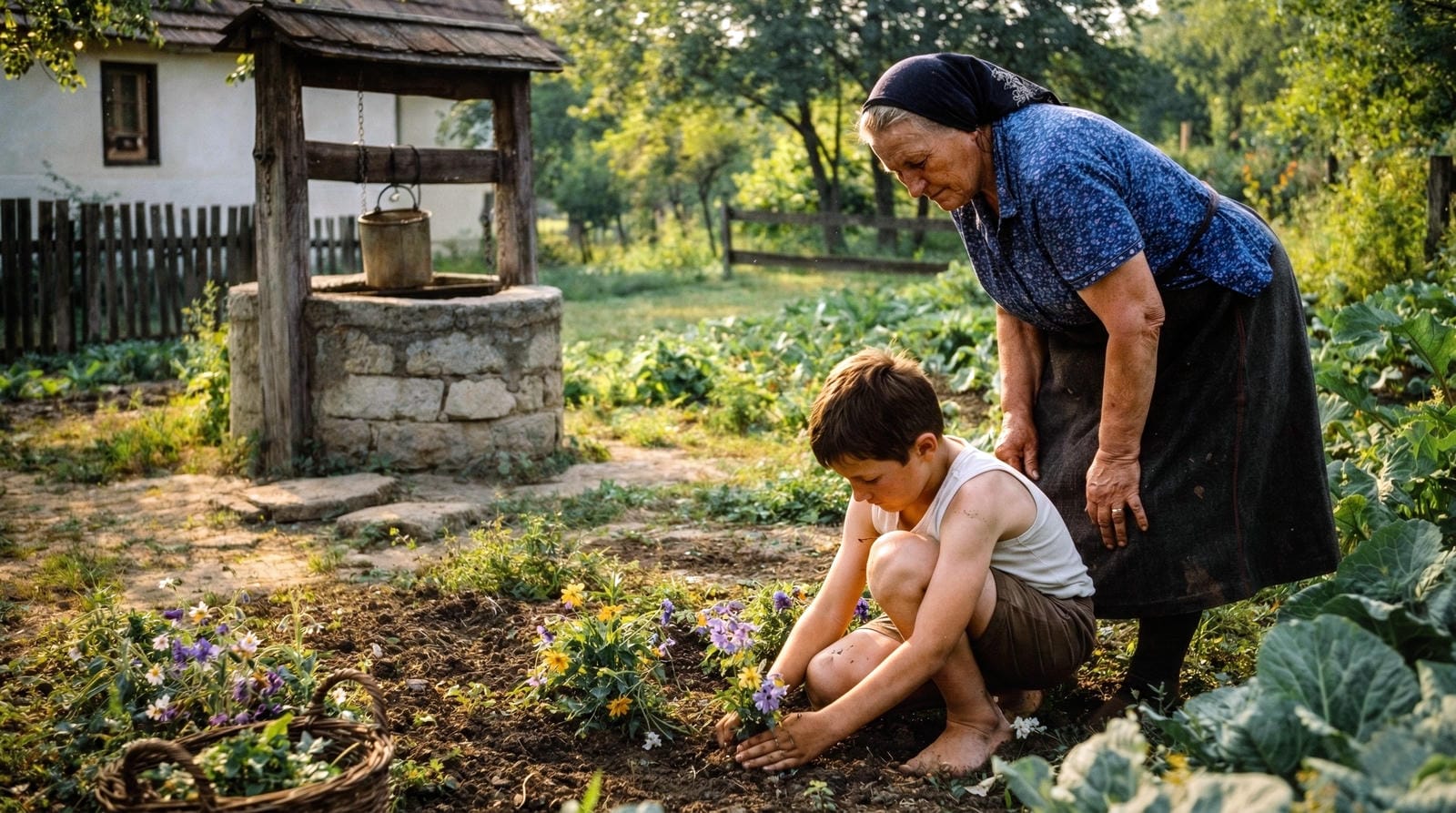
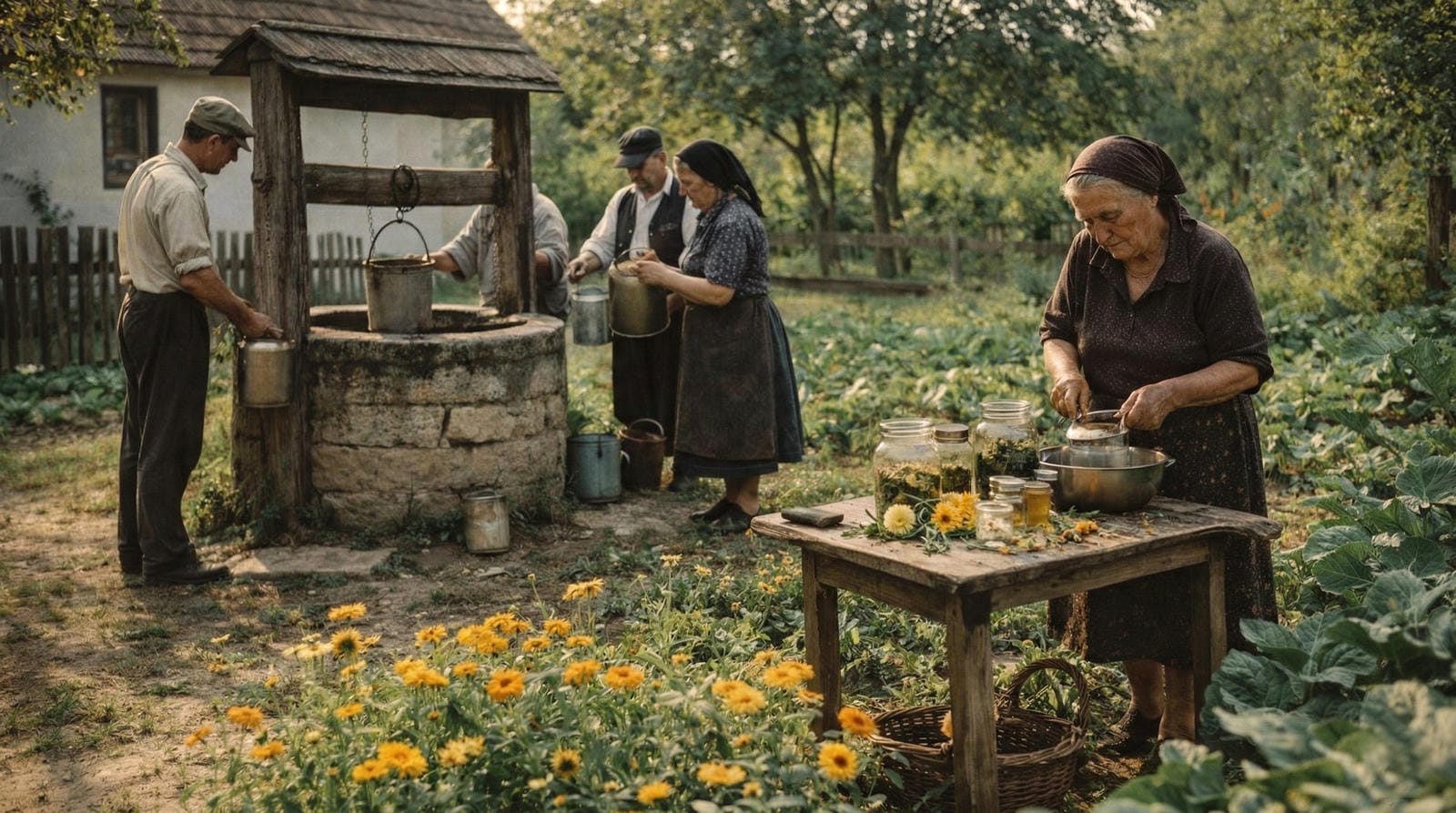
We drank water from the well. It was clean and unpolluted. The food was homemade, without artificial fertilisers or spraying. We knew plants like violets, snowdrops, and marigolds. A neighbour taught me how to make creams from wax and marigold that helped with wounds. Even today, I use herbal preparations because I believe they are healthier than medicines. My eldest son loved nature and flowers and transplanted them into the yard to preserve them. Knowledge is being lost. Young people often buy ready-made things, but whoever wants to can make everything themselves. From bread to sausages.
#TraditionalEcologicalKnowledge #SustainableAgriculture #SoilHealth #HumanNatureCoexistence #FoodSecurityAndSovereignty
Looking back at a lifestyle rooted in traditional ecological knowledge, the narrator describes a time when health and food came directly from nature without chemicals. The story highlights how people used plants like violets and marigolds for home remedies and intuitively knew how to transplant flowers to save them. It sadly notes that this self-sufficient knowledge is fading as people turn to buying ready-made products instead of making food from scratch.
The practices described align with the EU Farm to Fork Strategy’s objective to reduce the use of chemical pesticides and to increase organic farming. The story’s emphasis on herbal medicine resonates with the EU legal framework for Traditional Herbal Medicinal Products, which establishes procedures for registering traditional remedies. The loss of knowledge regarding wild plants is a concern addressed by the EU Biodiversity Strategy, which recognises the value of genetic resources and traditional knowledge for resilience. Projects like EthnoHERBS document such traditional knowledge to prevent its disappearance.
Ethnobotanical education programs in schools can reintegrate this lost knowledge, using frameworks like GreenComp to teach competences such as promoting nature. Community workshops on preparing traditional herbal remedies can serve as a vehicle for intergenerational learning, connecting elders possessing this knowledge with younger generations. The establishment of community seed banks and medicinal plant gardens can preserve local plant varieties, serving as living repositories of heritage. Projects like EthnoHERBS demonstrate how scientific validation of traditional remedies can add economic value while ensuring sustainable harvesting.
Sources:
https://cordis.europa.eu/project/id/823973
https://food.ec.europa.eu/horizontal-topics/farm-fork-strategy_en
https://joint-research-centre.ec.europa.eu/greencomp-european-sustainability-competence-framework_en
https://health.ec.europa.eu/medicinal-products/herbal-medicinal-products_en
The story you have just read is an authentic record of an elder’s experiences who participated in the HER[AI]TAGE project. While the content is original, the text may have been lightly edited for optimal clarity, flow, and readability. The accompanying visuals and audio recording were created responsibly with AI technology to enrich the storytelling experience while preserving the foundational authenticity of the presented story.
AI tools used: Google Gemini via Google AI Studio.