

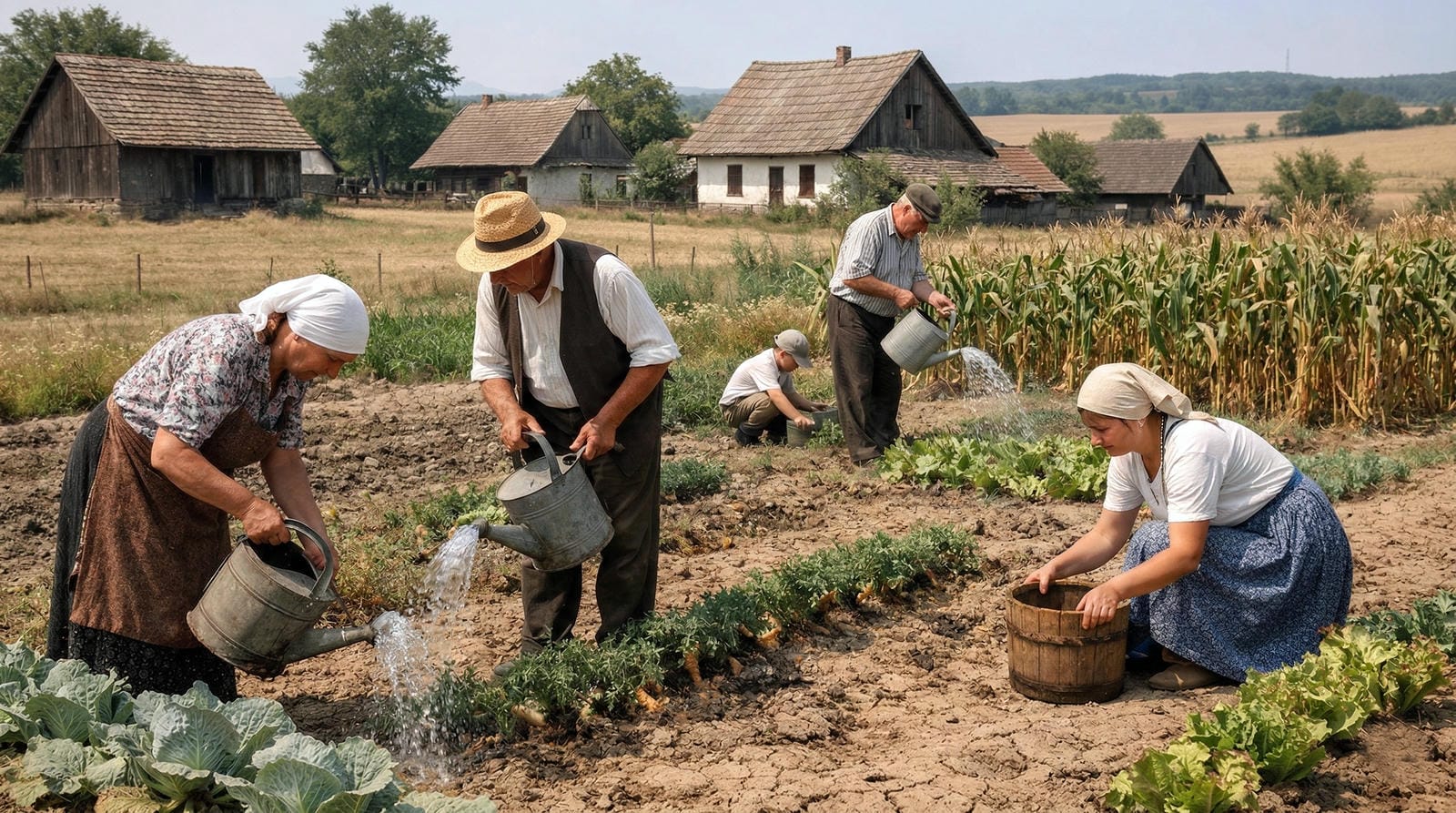
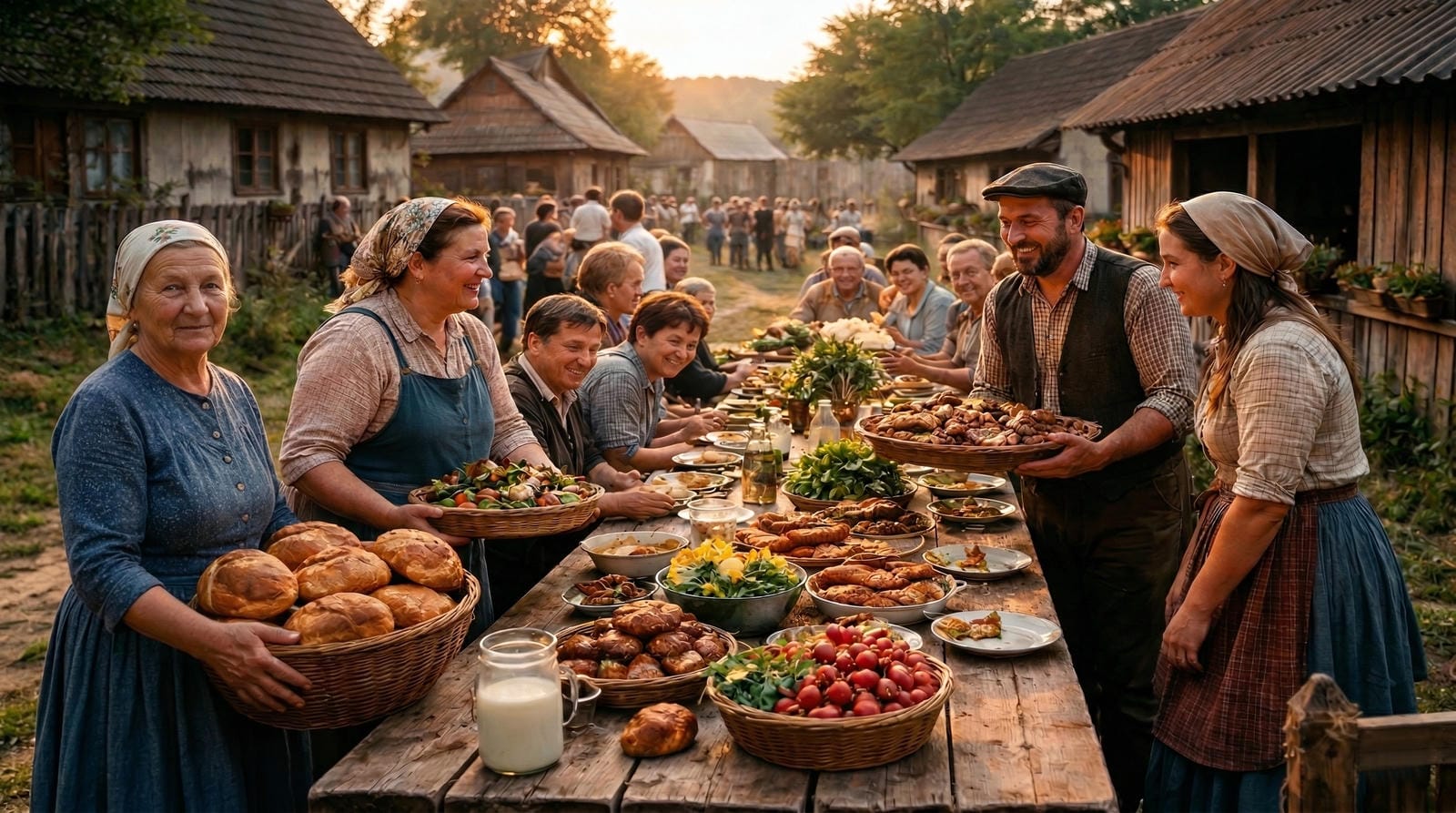
I remember droughts when every plant had to be watered by hand. People saved water then, and everything was used with care. I don’t remember big floods directly, but I know that every weather strike hit the village. There was solidarity back then. If someone ran out of flour or meat, it was borrowed. If there was a wedding or a feast, everyone would come and bring what they had. Today that doesn’t exist because people have drifted apart. Once, everything was tied to the land and weather conditions. That taught us modesty and togetherness.
#ClimateChangeAdaptation #CommunityLedHeritageManagement #ResponsibleConsumption #WaterQualityProtection #SocialSolidarity
This story focuses on how the community survived past environmental troubles, showing that relying on the land created a culture of helping each other and saving resources. It describes neighbours supporting one another during droughts and shortages, sharing food and managing water with great care. The narrative connects climate change adaptation with social unity, suggesting that because modern jobs are less tied to the local environment, these important social bonds have weakened.
The narrative anticipates the challenges of water scarcity, a key focus of the EU Strategy on Adaptation to Climate Change. The historic practice of careful water use aligns with modern imperatives for water efficiency mandated by the Water Framework Directive. The concept of solidarity in times of crisis is central to the EU Civil Protection Mechanism. The story highlights the importance of local resilience capacity, which is increasingly recognised in EU policy as community-based adaptation. The loss of social cohesion linked to environmental disconnect is addressed in the Just Transition mechanism.
Modern community resilience strategies can draw on these traditional solidarity models by establishing neighbourhood networks for disaster preparedness. Citizen science campaigns for drought monitoring can re-engage communities with their local climate reality. Reviving communal resource management for water or tools can strengthen social ties while promoting sustainability. Educational programs can use oral histories of past droughts to teach climate literacy, helping communities understand that resource conservation is a social value.
Sources:
https://climate-adapt.eea.europa.eu/en/eu-adaptation-policy/strategy
https://civil-protection-knowledge-network.europa.eu
https://warwick.ac.uk/research/impact/arts/scapvc/flood-memory
https://environment.ec.europa.eu/topics/water/water-framework-directive_en
The story you have just read is an authentic record of an elder’s experiences who participated in the HER[AI]TAGE project. While the content is original, the text may have been lightly edited for optimal clarity, flow, and readability. The accompanying visuals and audio recording were created responsibly with AI technology to enrich the storytelling experience while preserving the foundational authenticity of the presented story.
AI tools used: Google Gemini via Google AI Studio.