

Overview
Welcome to the first module of our course. This module provides an orientation to the course’s purpose, structure, and learning approach. This course builds upon the foundational knowledge you have gained from participating in the “AI and Generative AI in Adult Education” course. Where that course focused on the “what” and “why” of AI, this course is dedicated to the practical “how” as it will provide a walkthrough of a complete heritage preservation project, moving sequentially from initial data gathering to final presentation. At every step, we will demonstrate how Artificial Intelligence (AI), focusing on the versatile capabilities of tools like Google Gemini, can be used as a powerful and creative assistant to support your work.
The learning approach for this course is demonstration-focused. You will observe and understand processes through explanatory text, illustrative examples, and clear AI prompt-and-response demonstrations. While formal assignments are not required, the course is designed to be followed practically. We strongly encourage you to experiment with the tools as they are demonstrated; this optional “active doing” is the best way to transform conceptual knowledge into skill.
Intangible cultural heritage: Concepts and examples
Before we proceed, it is important to understand what we mean by “intangible cultural heritage” (ICH). According to UNESCO, ICH refers to the practices, representations, expressions, knowledge, and skills – as well as the instruments, objects, artefacts, and cultural spaces associated therewith – that communities, groups and, in some cases, individuals recognise as part of their cultural heritage. Unlike monuments or collections of objects, ICH is a living form of heritage, continuously recreated by communities in response to their environment, their interaction with nature, and their history.
Examples of intangible cultural heritage are all around us and include:
- Oral traditions and expressions, such as storytelling, proverbs, and epic poems.
- Performing arts, including traditional music, dance, and theatre.
- Social practices, rituals, and festive events, which structure the life of communities and groups.
- Knowledge and practices concerning nature and the universe, such as traditional ecological knowledge and craftsmanship skills.
The HER[AI]TAGE case study
Throughout this course, we will use the HER[AI]TAGE project as our guiding case study to make the learning immediately applicable. This Erasmus+ funded project aims to leverage AI technology to preserve and promote the intangible cultural heritage and traditional environmental knowledge of senior citizens (aged 60+) related to the ecosystems of the Drava, Mura, and Danube rivers in Croatia, Slovenia, and Serbia. By grounding our modules in this real-world, cross-border project, we provide a tangible context for every AI application we demonstrate. By documenting the oral histories of the elderly, the project captures invaluable knowledge about traditional ways of life, ecological wisdom, and the cultural practices that define the region’s identity. The project then takes a crucial next step: using the power of (generative) AI to transform these memories into appealing and interactive story collections and exhibits. This not only preserves the heritage but also ensures its transmission to younger generations, keeping it alive and relevant in a digital world. We hope that reading about the AI approaches taken in the HER[AI]TAGE project will inspire you to start your own (intangible) cultural heritage project.
AI interaction model: The human as cultural interpreter
Throughout this course, we will demonstrate interactions with AI tools. You will see example “prompts,” which are our instructions to the AI, and the “responses,” which are the AI’s generated content.
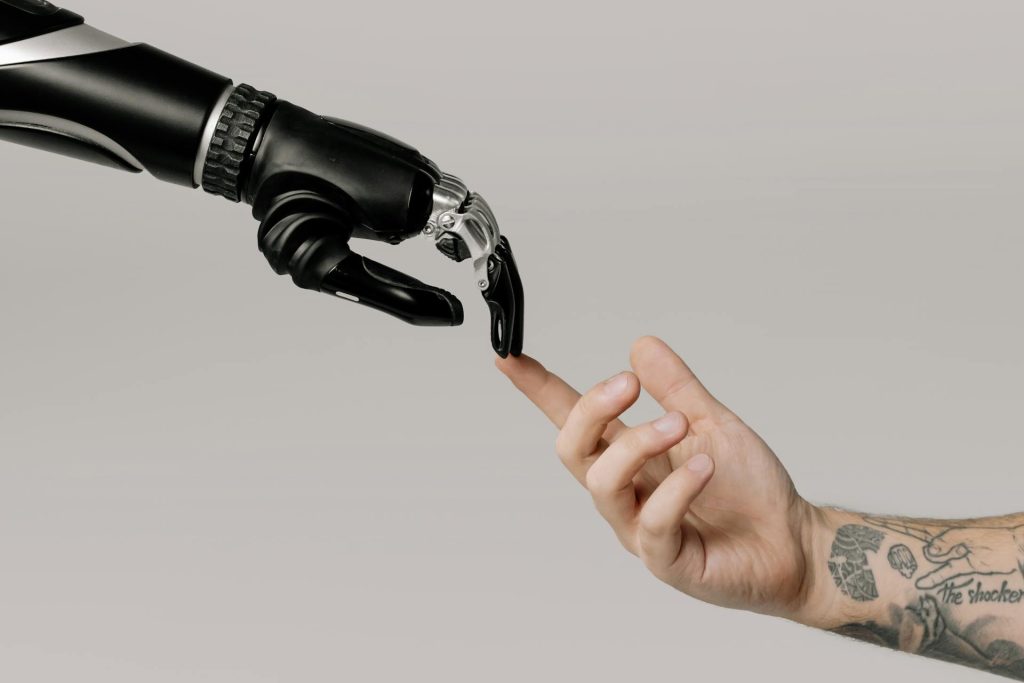
It is vital to understand from the outset that the effectiveness of AI in a heritage context depends entirely on the quality of human guidance. The “human-in-the-loop” is not just a fact-checker but a cultural interpreter and domain expert. AI models lack a true understanding of cultural nuance, historical context, or the emotional weight of a memory.
The prompt-writer and the final editor provide this essential context. The AI can generate text, but the human provides the meaning and ensures its respectful application.
To give you a clear idea of how we will demonstrate AI’s utility, here is a practical example. Notice how the prompt is specific, provides context from the HER[AI]TAGE project, and defines a role for the AI to “act as.” This level of detail, provided by a human expert, guides the AI to produce a more relevant and useful response.
Example prompt:
Act as a cultural heritage project consultant. Based on the specific goal of the HER[AI]TAGE project to preserve oral histories about the river Mura from senior citizens, list five key project phases we will need to plan for.
Example AI response:
Certainly. For a project focused on preserving oral histories about the river Mura, you should plan for the following five key phases:
- Preparation and outreach: Defining the project scope, developing ethical guidelines based on established principles, and identifying and respectfully contacting potential storytellers.
- Data collection and digitisation: Conducting and recording interviews using best practices for audio quality and systematically organising the raw audio files and associated notes with robust metadata.
- Content processing and enrichment: Transcribing the interviews, summarising the core narratives, and using AI to help generate supplementary materials like descriptive texts or illustrative concepts.
- Curation and presentation: Assembling the collected and processed materials into an accessible format, such as a digital exhibit or online collection, with a strong focus on accessibility standards.
- Feedback, sustainability, and dissemination: Sharing the work with the community for feedback, creating a plan for the long-term maintenance of the digital archive, and disseminating the results to a wider audience.
As we move through the learning modules, remember that the content is presented for your understanding and conceptual absorption. The primary goal is to familiarise you with the possibilities and the framework, preparing you to apply these techniques with confidence and integrity in your own project and activities.